A for"Absolutes" in Fragrance

The Complete Guide to Absolutes in Fragrance: Your Commercial Game-Changer
Why understanding absolutes could be the difference between amateur perfumery and profitable business
Introduction: What Are Absolutes and Why Should You Care?
In the world of perfumery, few ingredients command as much respect—and price premium—as absolutes. If you're serious about building a fragrance business, understanding absolutes isn't just helpful; it's essential for creating products that customers will pay top dollar for.
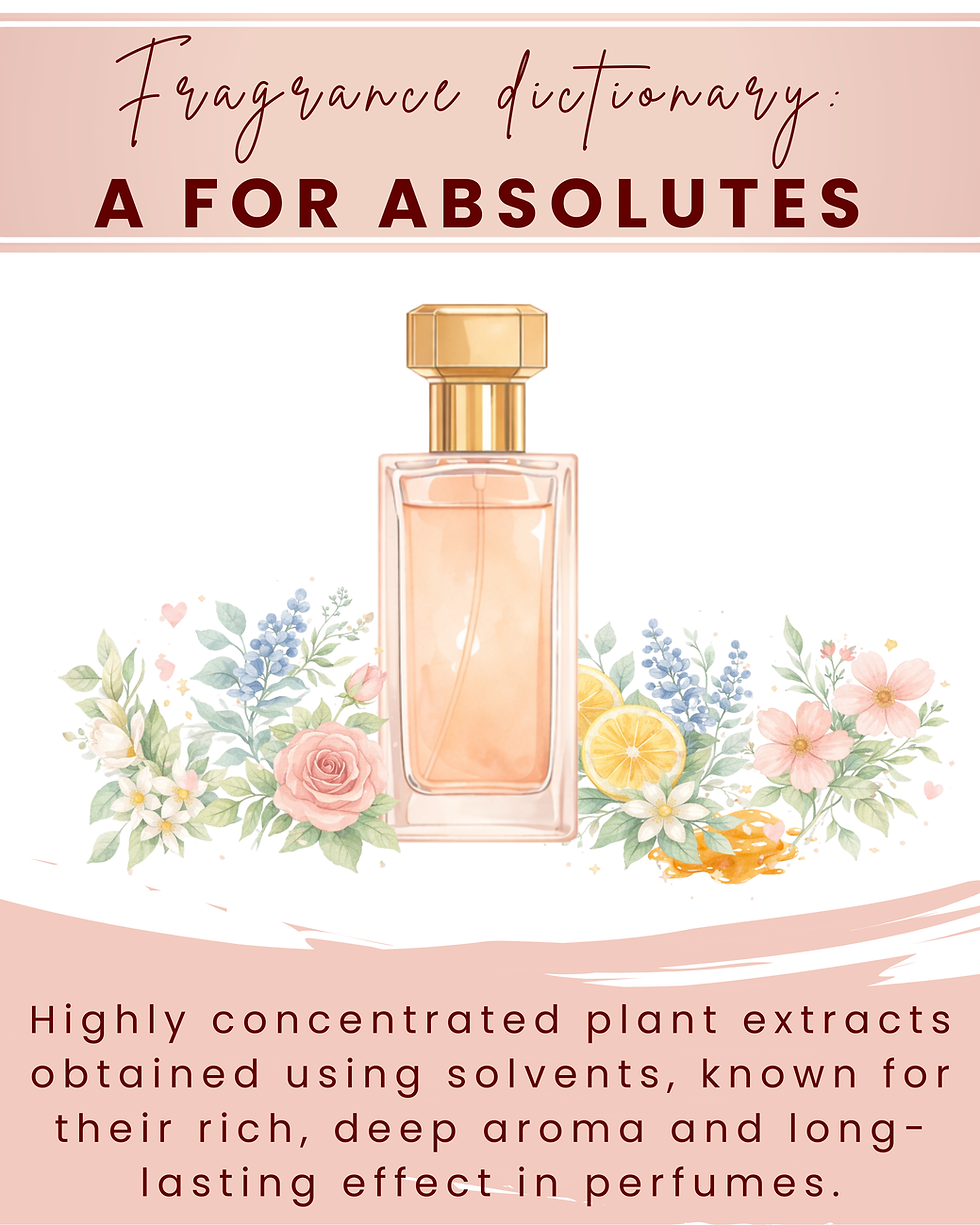
An absolute is the most concentrated, purest form of a plant's aromatic compounds. Think of it as the "essence of the essence"—what remains after essential oils go through an additional purification process. While essential oils capture the volatile compounds of a plant, absolutes capture both volatile and non-volatile compounds, giving you a more complete, richer, and often more accurate representation of the original plant's scent.
The Commercial Reality: A single drop of rose absolute can cost more than most people spend on their entire fragrance collection. But here's the opportunity—when used correctly, that same drop can justify premium pricing that transforms your perfumery from a hobby into a serious revenue stream.
How Absolutes Are Made: The Science Behind the Premium
The Solvent Extraction Process
Absolutes are created through a sophisticated two-step process:
Step 1: Creating the Concrete
Fresh plant material is treated with a hydrocarbon solvent (typically hexane)
This dissolves both aromatic compounds and plant waxes
The result is a waxy, semi-solid substance called a "concrete"
Step 2: Creating the Absolute
The concrete is then treated with ethyl alcohol
This dissolves the aromatic compounds while leaving behind the waxes
The alcohol is then removed, leaving behind the pure absolute
Why This Matters for Your Business
This complex extraction process explains why absolutes cost significantly more than essential oils—but it also explains why they're worth it. The additional processing creates ingredients that are:
More true-to-nature than essential oils
Longer-lasting in finished fragrances
More complex in scent profile
Highly concentrated (a little goes a very long way)
Commercial Applications: Where Absolutes Shine
1. Luxury Perfumes
Market Opportunity: High-end personal fragrances Price Point: ₹3,000-₹15,000+ per bottle Key Absolutes: Rose, jasmine, tuberose, neroli
Absolutes are the backbone of luxury perfumery. While synthetic compounds dominate mass-market fragrances, discerning customers actively seek out natural absolutes for their complexity and sophistication.
Business Tip: A perfume containing genuine rose absolute can command 3-5x the price of one made with rose essential oil or synthetic rose compounds.
2. Premium Solid Perfumes
Market Opportunity: Artisanal, travel-friendly fragrances Price Point: ₹800-₹2,500 per compact Key Absolutes: Sandalwood, patchouli, frankincense
Solid perfumes made with absolutes offer exceptional longevity and richness. The waxy nature of some absolutes actually complements the solid perfume format perfectly.
Business Tip: Market these as "concentrated luxury"—customers appreciate that they're getting maximum scent in minimum package size.
3. Therapeutic and Aromatherapy Products
Market Opportunity: Wellness and spa products Price Point: ₹1,200-₹4,000 per product Key Absolutes: Lavender, chamomile, rose
The complete chemical profile of absolutes makes them particularly valuable in aromatherapy applications where customers seek authentic, therapeutic-grade products.
4. Custom Fragrance Services
Market Opportunity: Bespoke perfume creation Price Point: ₹5,000-₹25,000+ per custom fragrance Key Absolutes: Rare florals, exotic woods
Offering custom fragrances with genuine absolutes positions you in the luxury market where profit margins are highest.
The Most Commercially Valuable Absolutes
Tier 1: Premium Florals
Rose Absolute
Cost: ₹15,000-₹30,000 per 10ml
Usage Rate: 0.5-2% in finished fragrance
Commercial Value: Instant luxury positioning
Best For: High-end perfumes, premium gifts
Jasmine Absolute
Cost: ₹12,000-₹25,000 per 10ml
Usage Rate: 0.5-1.5% in finished fragrance
Commercial Value: Exotic, sensual appeal
Best For: Evening perfumes, romantic fragrances
Tuberose Absolute
Cost: ₹8,000-₹18,000 per 10ml
Usage Rate: 0.2-1% in finished fragrance
Commercial Value: Distinctive, memorable scent
Best For: Signature scents, niche markets
Tier 2: Versatile Luxury
Sandalwood Absolute
Cost: ₹6,000-₹15,000 per 10ml
Usage Rate: 2-8% in finished fragrance
Commercial Value: Broad appeal, unisex
Best For: Meditation products, unisex fragrances
Patchouli Absolute
Cost: ₹3,000-₹8,000 per 10ml
Usage Rate: 1-5% in finished fragrance
Commercial Value: Bohemian, artisanal appeal
Best For: Solid perfumes, indie brands
Tier 3: Specialty Markets
Frankincense Absolute
Cost: ₹4,000-₹10,000 per 10ml
Usage Rate: 1-3% in finished fragrance
Commercial Value: Spiritual, wellness positioning
Best For: Aromatherapy, meditation products
Pricing Strategy: How to Justify Premium Costs
Cost Structure Example
Let's break down the economics of a 10ml luxury perfume using rose absolute:
Ingredients:
Rose absolute (0.5ml): ₹750
Supporting essential oils: ₹150
Alcohol base: ₹50
Bottle and packaging: ₹200 Total Cost: ₹1,150
Recommended Retail Price: ₹4,500-₹6,000
Profit Margin: 75-80%
Justifying the Price
Rarity: Emphasize the precious nature of the ingredients
Craftsmanship: Position as artisanal, small-batch production
Longevity: Highlight superior lasting power
Authenticity: Market as "genuine botanical luxury"
Storage and Handling: Protecting Your Investment
Proper Storage Conditions
Temperature: 15-20°C (cool, not cold)
Light: Store in dark glass bottles
Air exposure: Minimize oxidation with tight seals
Contamination: Use clean tools and surfaces always
Shelf Life Management
Most absolutes: 3-5 years when properly stored
Citrus absolutes: 2-3 years (more prone to oxidation)
Resinous absolutes: 5+ years (very stable)
Business Tip: Buy absolutes in smaller quantities more frequently rather than large amounts that might degrade before use.
Quality Assessment: Spotting Authentic Absolutes
Red Flags to Avoid
Suspiciously low prices (genuine rose absolute will never be cheap)
Overly fluid consistency (most absolutes are viscous)
Weak scent throw (absolutes should be potent)
Lack of complexity (absolutes have multi-layered scent profiles)
Working with Suppliers
Request certificates of analysis
Ask about extraction methods
Start with small sample sizes
Build relationships with reputable suppliers
Regulatory and Safety Considerations
IFRA Guidelines
The International Fragrance Association provides usage guidelines for absolutes in cosmetic applications:
Maximum usage levels vary by absolute and application
Allergen declarations required for certain compounds
Safety data sheets essential for commercial production
Documentation for Business
Maintain ingredient records for all absolutes used
Track batch numbers for quality control
Keep safety documentation for regulatory compliance
Building Your Absolute-Based Product Line
Start Small, Think Big
Phase 1: Single-Note Absolutes
Begin with one premium absolute (sandalwood or patchouli)
Create solid perfumes and roll-ons
Perfect your technique and customer feedback
Phase 2: Signature Blends
Combine 2-3 absolutes in signature fragrances
Develop your brand's unique scent profile
Build customer loyalty through consistent quality
Phase 3: Custom Collections
Offer bespoke fragrance services
Create seasonal or limited editions
Expand into complementary products (candles, diffuser oils)
Marketing Your Absolute-Based Products
Key Messaging:
"Hand-crafted with precious botanical absolutes"
"The finest ingredients from around the world"
"Luxury fragrance at artisanal prices"
"Natural complexity you can't find elsewhere"
Target Customers:
Luxury seekers: Those who appreciate premium ingredients
Natural product enthusiasts: Customers avoiding synthetic fragrances
Collectors: People who enjoy rare and unique scents
Gift buyers: Those seeking special, memorable presents
The Future of Absolutes in Commercial Perfumery
Market Trends
Growing demand for natural luxury products
Increased awareness of ingredient quality
Premiumization of personal care markets
Sustainability focus driving authentic natural products
Opportunities for Small Businesses
Large brands are often constrained by cost considerations
Artisanal producers can use absolutes more freely
Direct-to-consumer sales allow better margin capture
Storytelling potential of rare, precious ingredients
Conclusion: Your Absolute Advantage
Understanding and working with absolutes isn't just about creating better fragrances—it's about positioning your business in the premium market where profitability and customer loyalty are highest. While the initial investment in absolutes may seem significant, the ability to create truly luxurious products that command premium prices makes this investment worthwhile.
Remember: in a market flooded with synthetic fragrances and mass-produced scents, absolutes offer you something genuinely rare and valuable. Use them wisely, price them appropriately, and market them effectively, and you'll find that absolutes aren't just ingredients—they're the foundation of a profitable fragrance business.
Next Steps:
Research suppliers for your first absolute purchase
Start with one versatile absolute (sandalwood or patchouli recommended)
Create sample products to test market response
Develop your pricing strategy based on local market conditions
Begin building relationships with customers who appreciate quality
The world of absolutes awaits—and so does your premium fragrance business.
Want to learn how to work with absolutes hands-on? Join our comprehensive perfumery courses at Skill to Startup, where we teach you not just the art of fragrance creation, but the business skills to turn your passion into profit.


Comments